Kaleja.
Kaleja in three words? Memory, fire, and Andalusia.
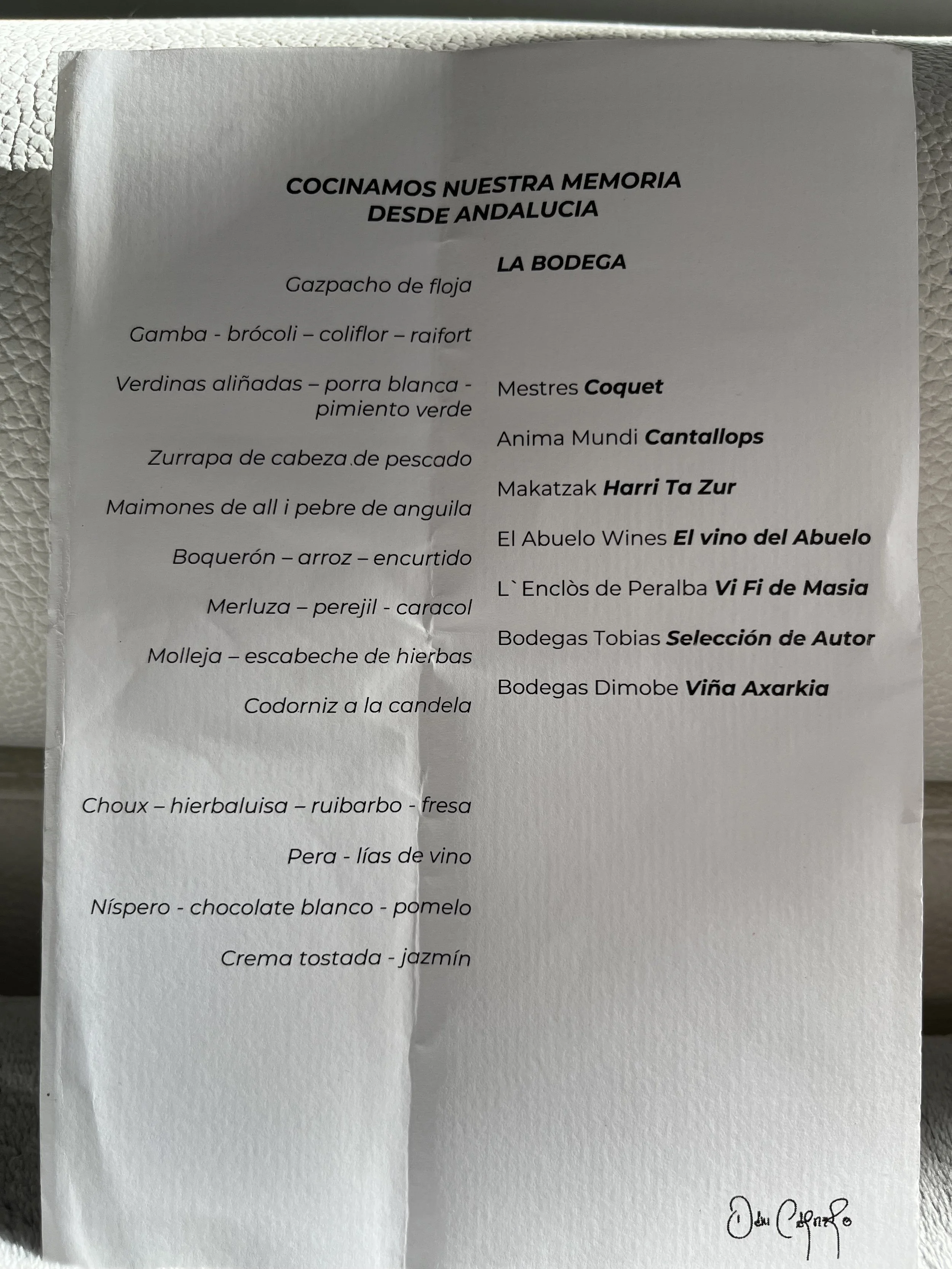
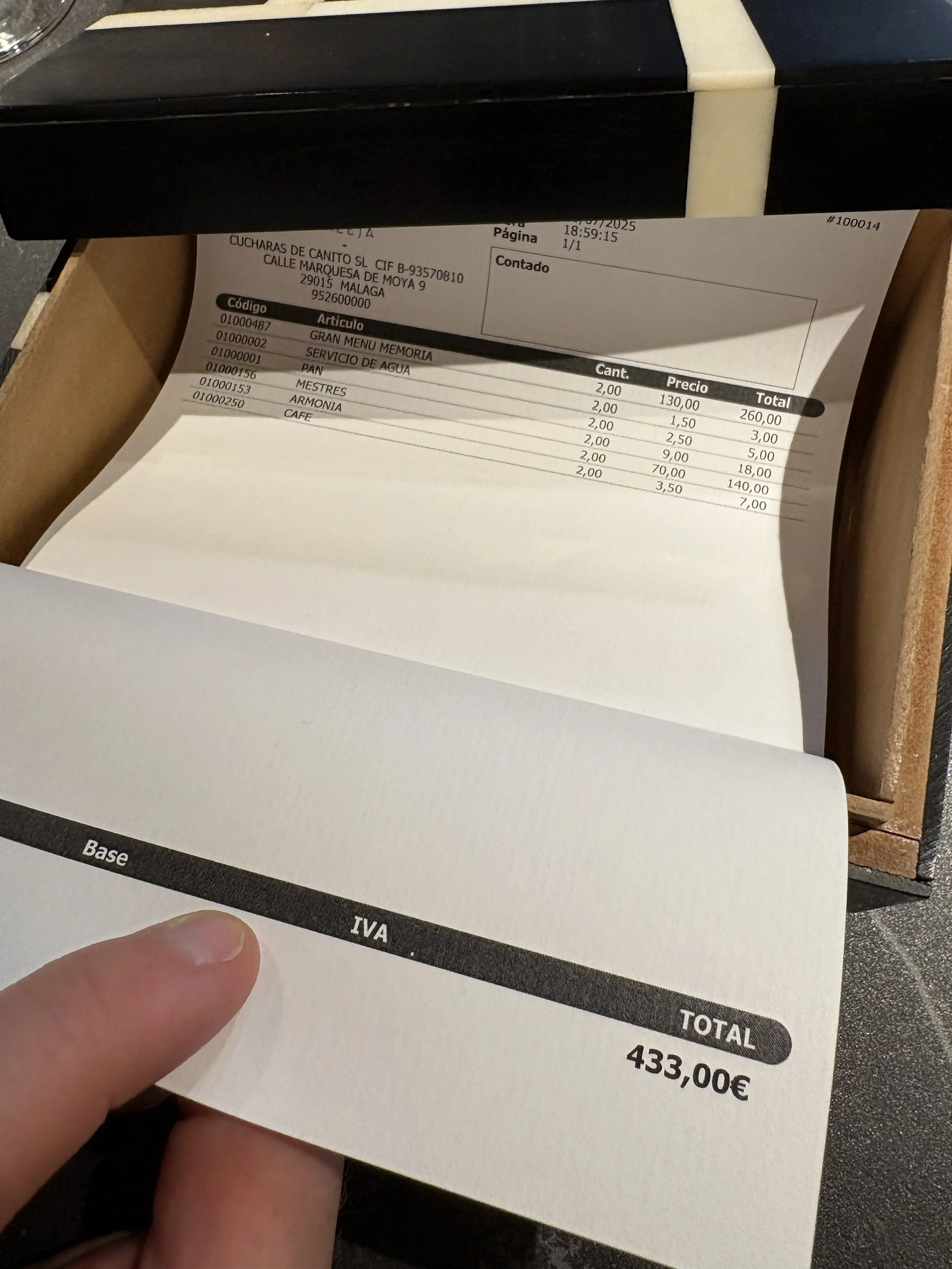
The thirteen-course Gran Menú Memoria came with a fitting title: Cocinamos nuestra memoria desde Andalucía — we cook our memory from Andalusía. And Andalusía was exactly what this menu tasted like.
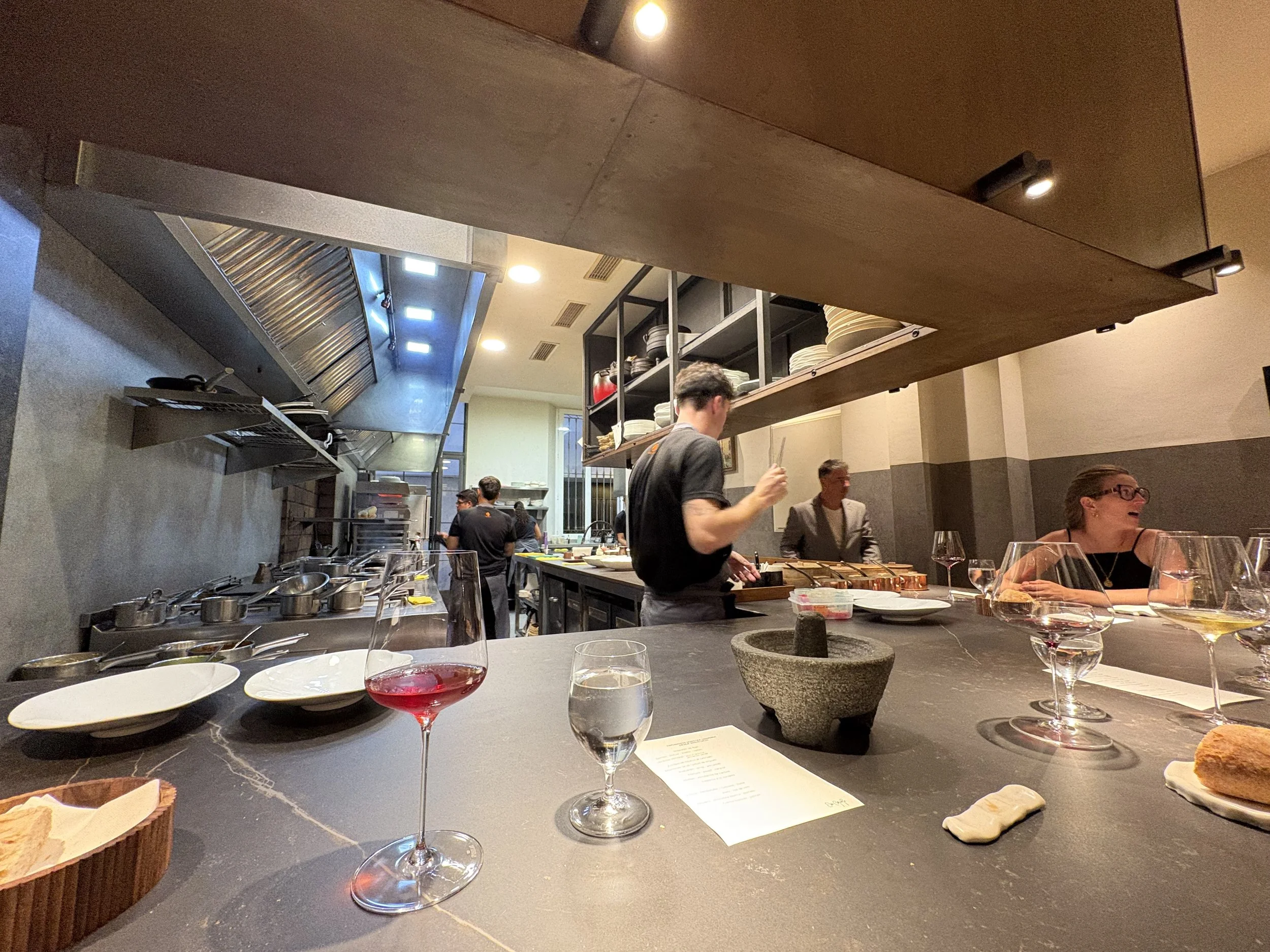
We had booked the chef’s table so we could fully enjoy the show. Naturally, with wine pairing.
To wake up the palate, we started with a glass of Mestres sparkling wine from Coquet winery.
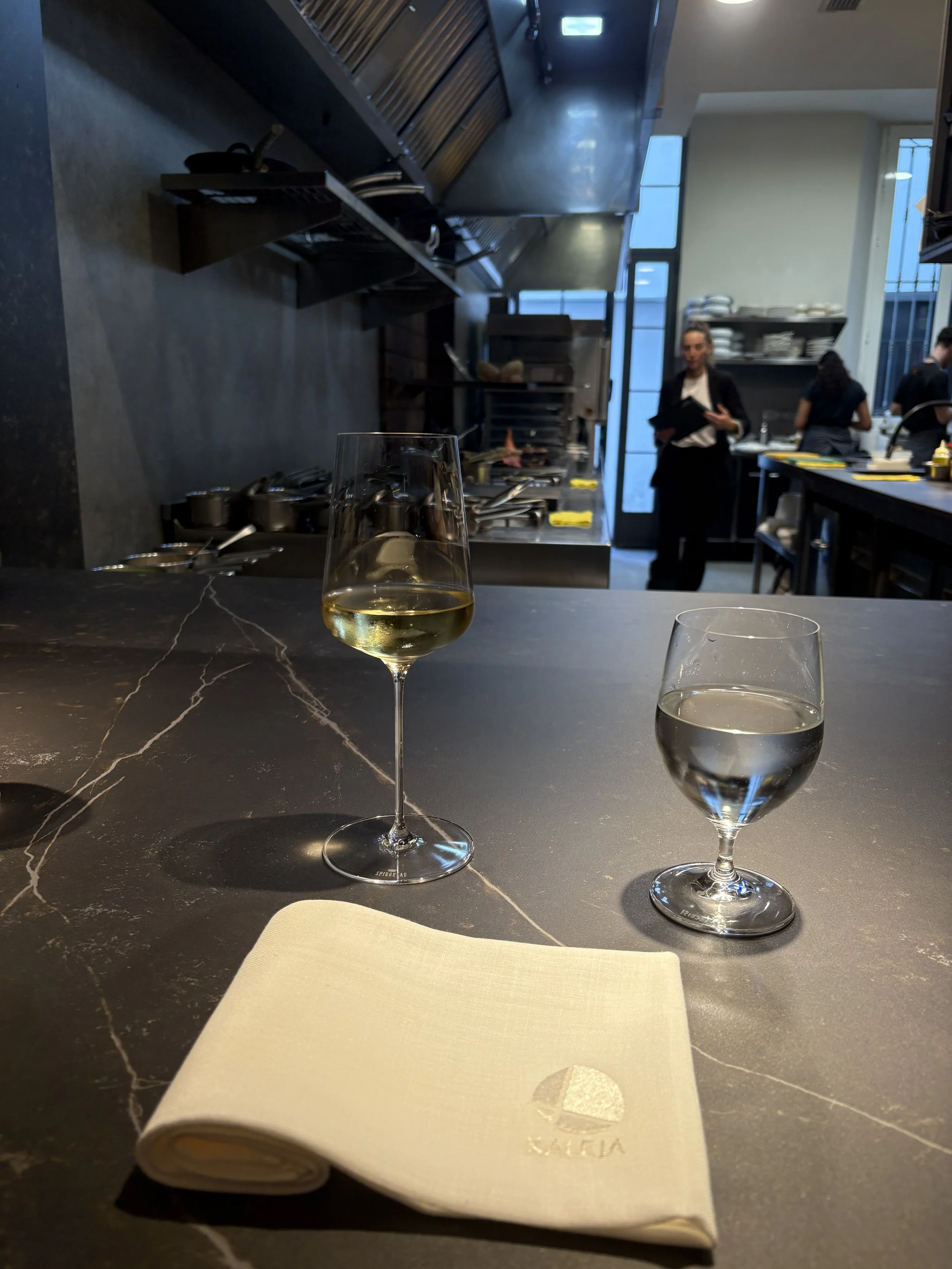
Sitting at the counter, hypnotized by the glow of the embers, we barely noticed how simple the space actually was. Without realizing it, it was already a preview of what would arrive on the plate: food centered entirely around flavor, stripped of any unnecessary showmanship.
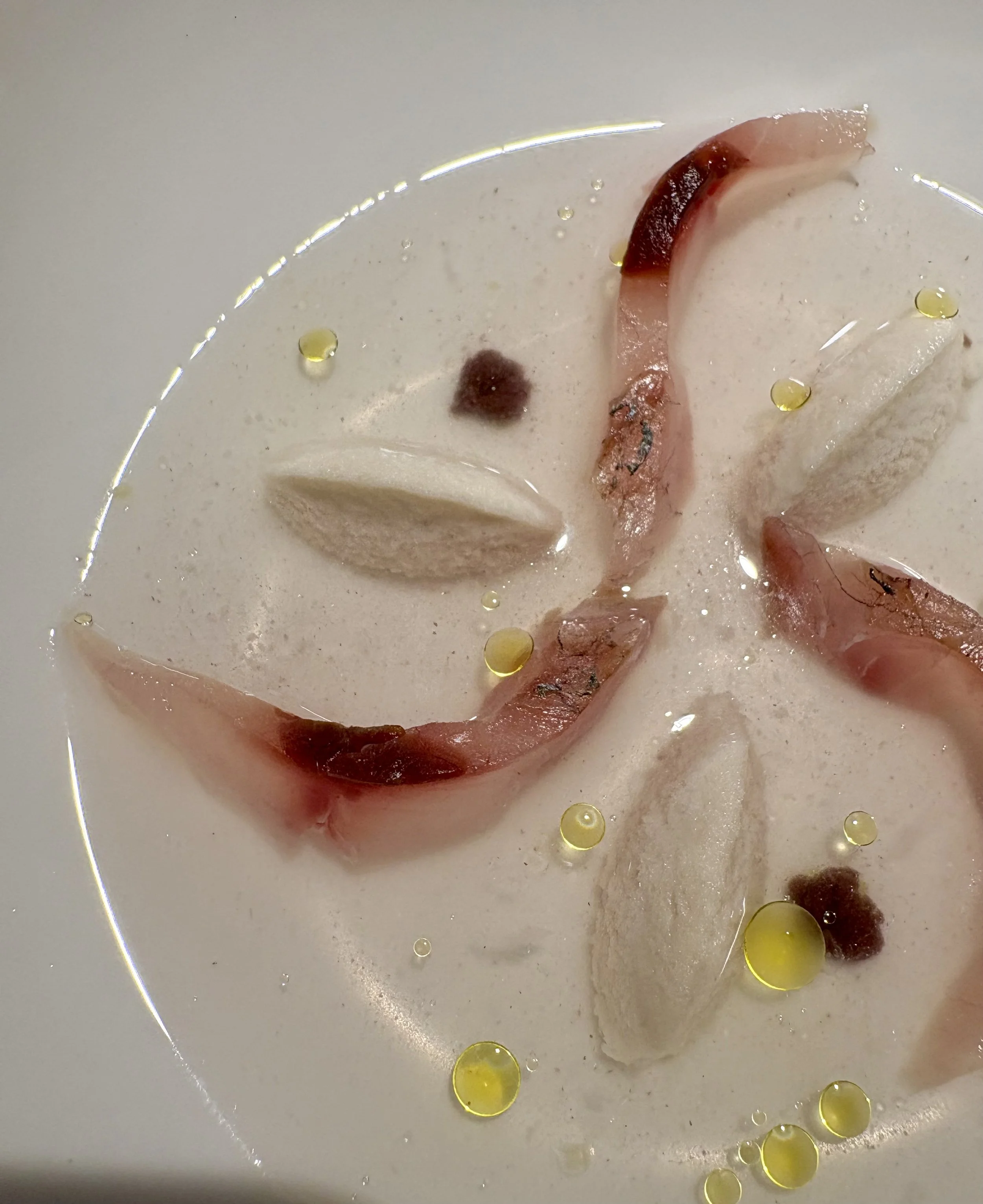
Dinner began with a Gazpacho de floja: a refined take on the traditional Andalusian cold onion soup.
The chef aimed for freshness here, adding horse mackerel fillets, almond notes, vermouth, and trout roe. Magnificent.
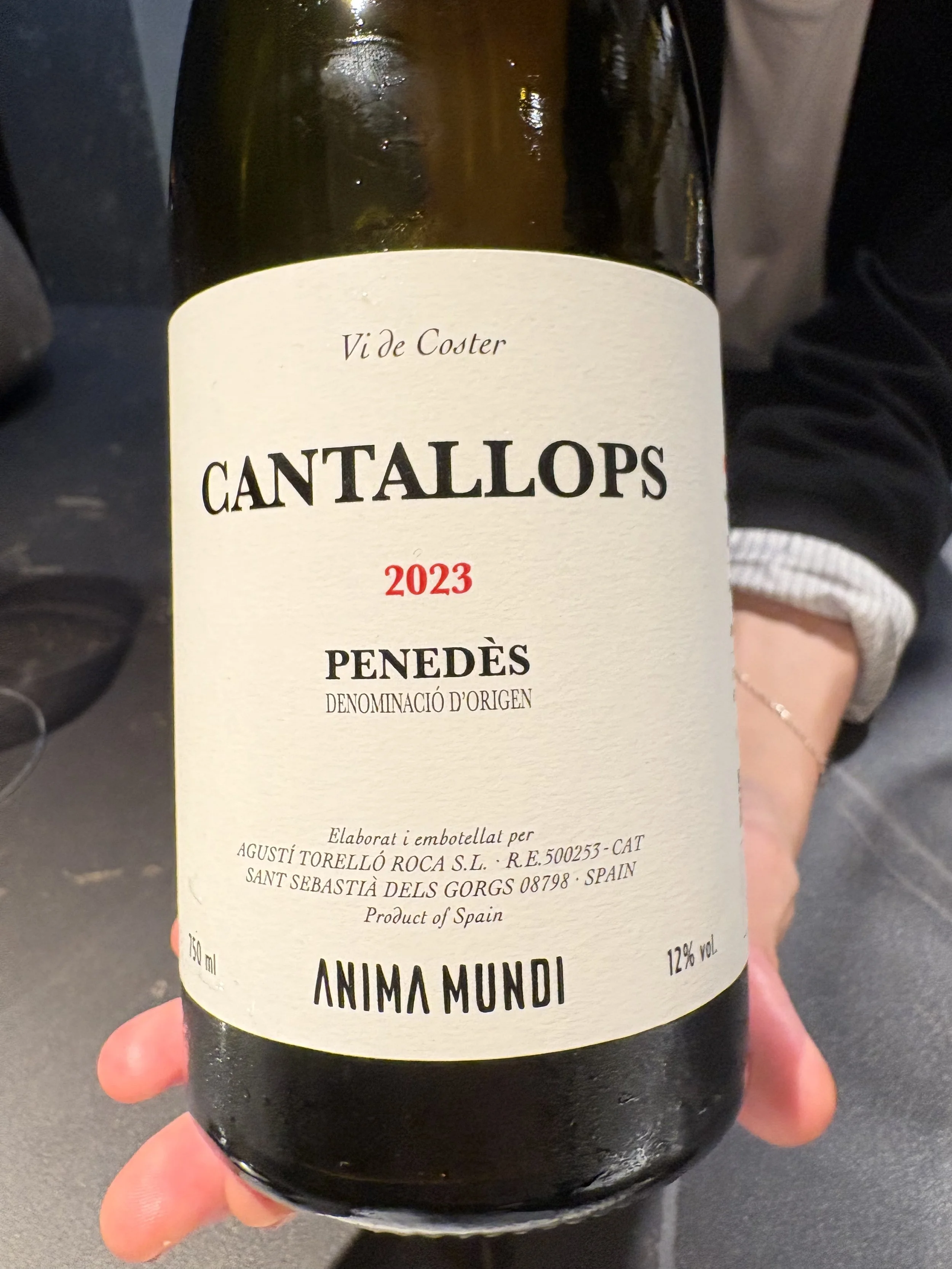
Alongside it, we drank a glass of Cantallops 2023 by Anima Mundi.
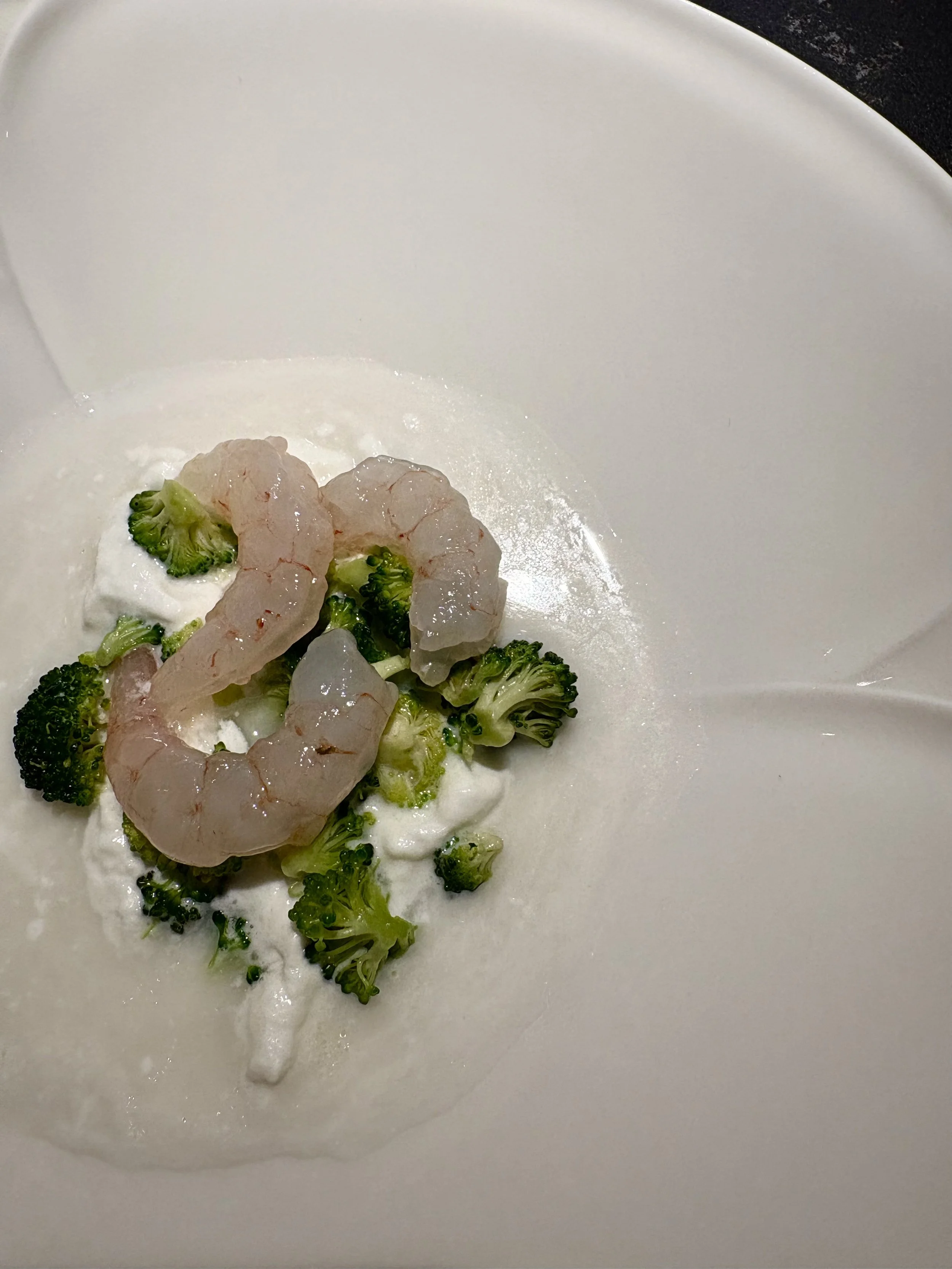
Next came another agua fresca, this time made with cauliflower, served with raw shrimp and perfectly al dente broccoli, all elegantly lifted by the sharp heat of horseradish. Spectacular. Without a doubt the dish that moved me the most throughout the entire menu — and there were many memorable ones.
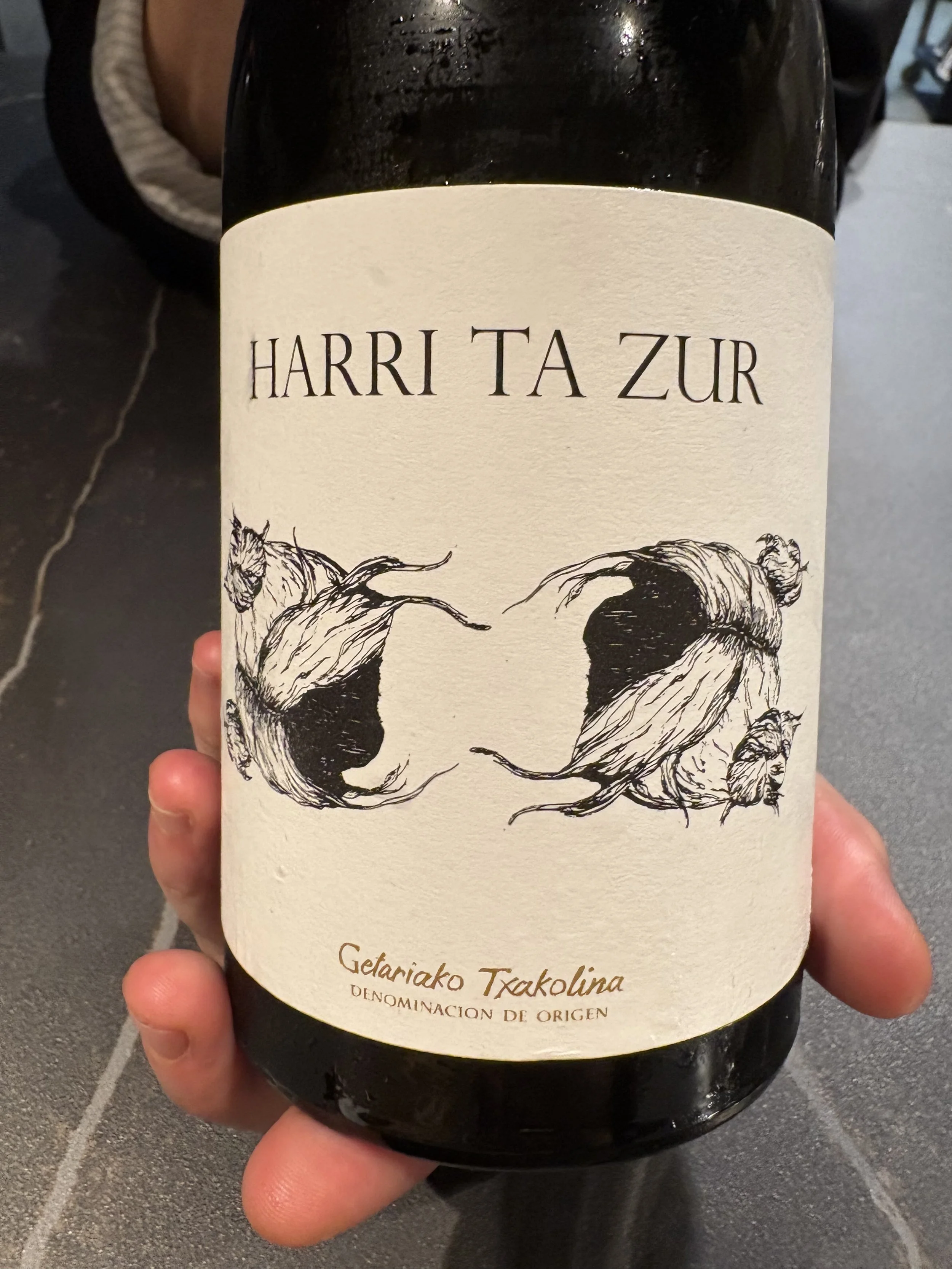
Paired with Harri Ta Zur by Makatzak: an explosion of flavors.
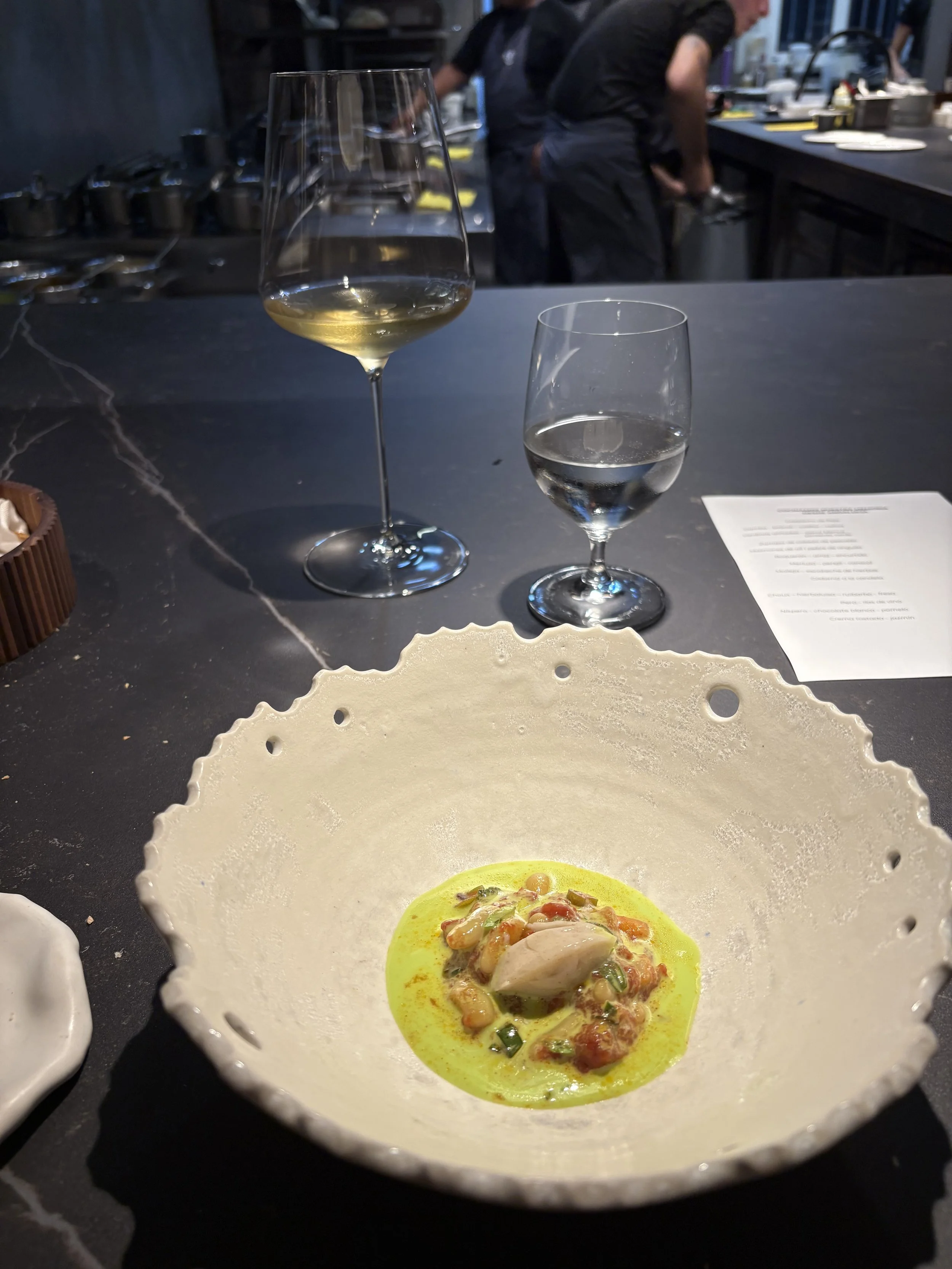
Following the same fresh, vegetable-driven direction, we were served peeled broad beans in white sauce, elevated by red pepper and green pepper juice — deeply flavorful, almost acid-green in color.
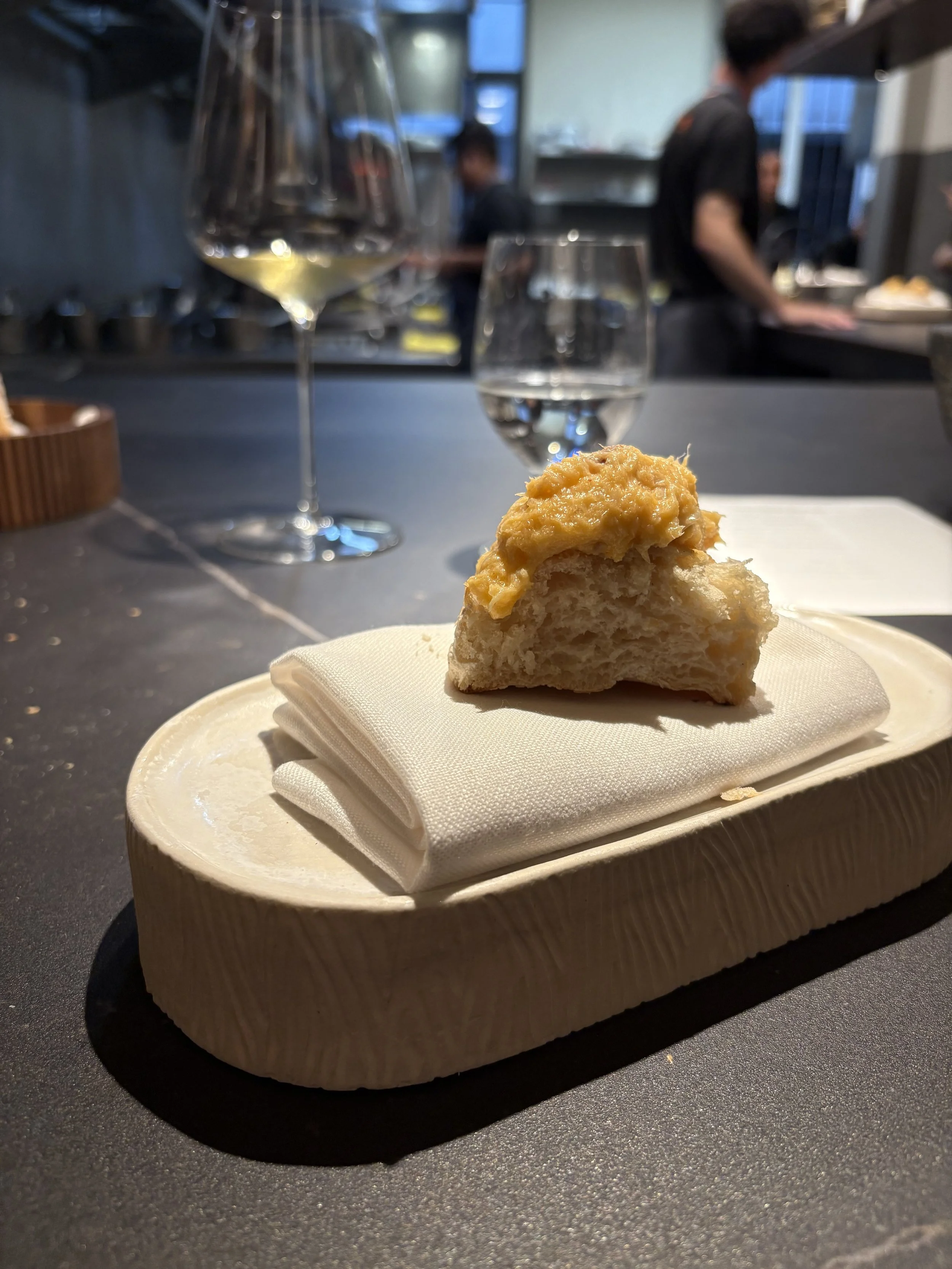
The Zurrapa was wonderful: a rich spread made from fish heads, intensely savory and served over bread. Like a bite of seafood soup with the texture of whipped salt cod. Photonic.
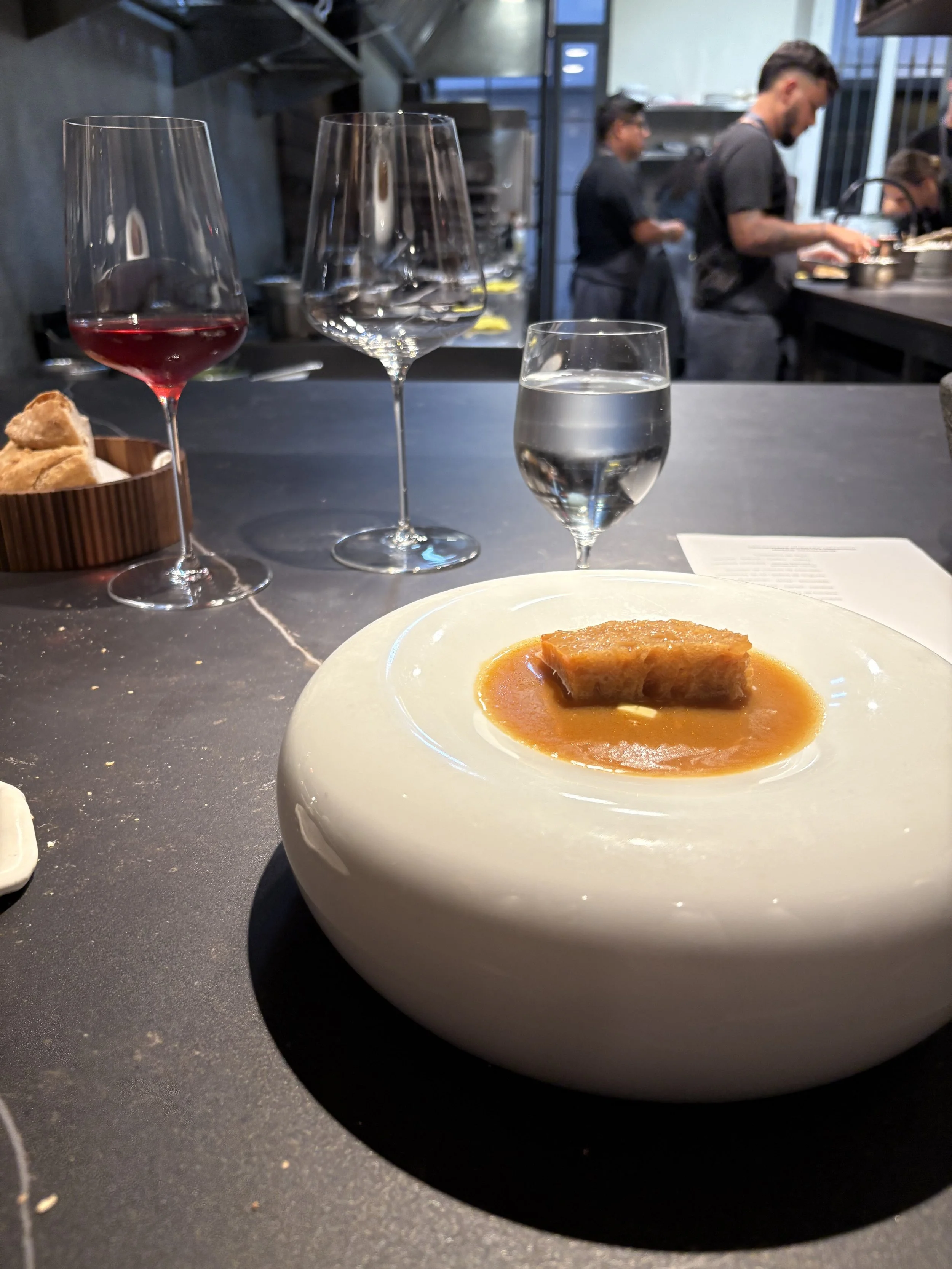
The Maimones de all i pebre de anguila was equally outstanding: the chef brilliantly merged Andalusian cuisine (maimones, a humble soup made with bread, jamón, and eggs) with Valencian cooking (all i pebre de anguila, an eel stew), putting southern Spain into a single bite.
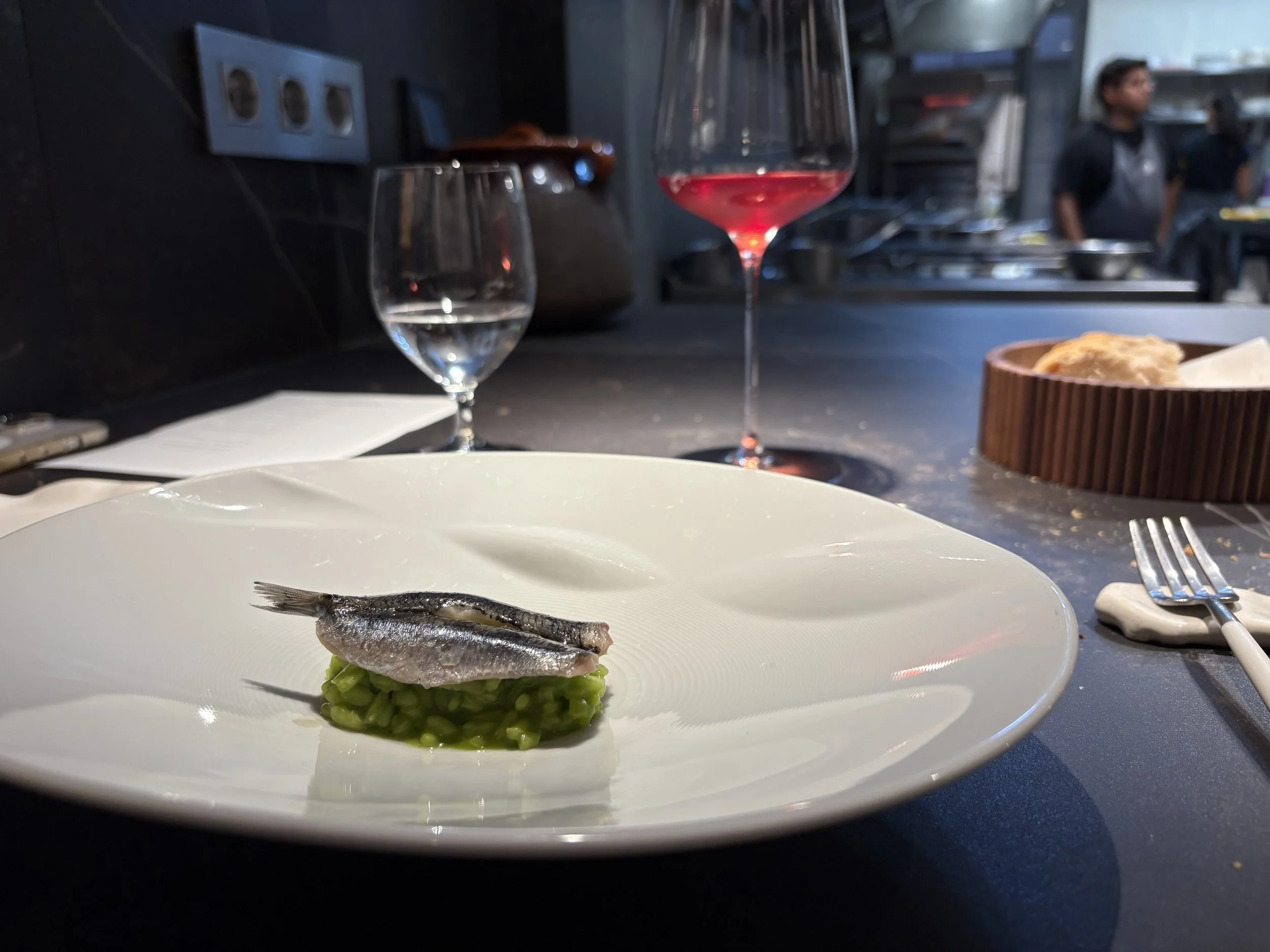
Then came a spoonful of intensely green risotto built around pickled vegetables, its acidity balanced beautifully by the richness of the boquerones.
All of this accompanied by a glass of El vino del Abuelo, an ancestral wine from El Abuelo Wines.
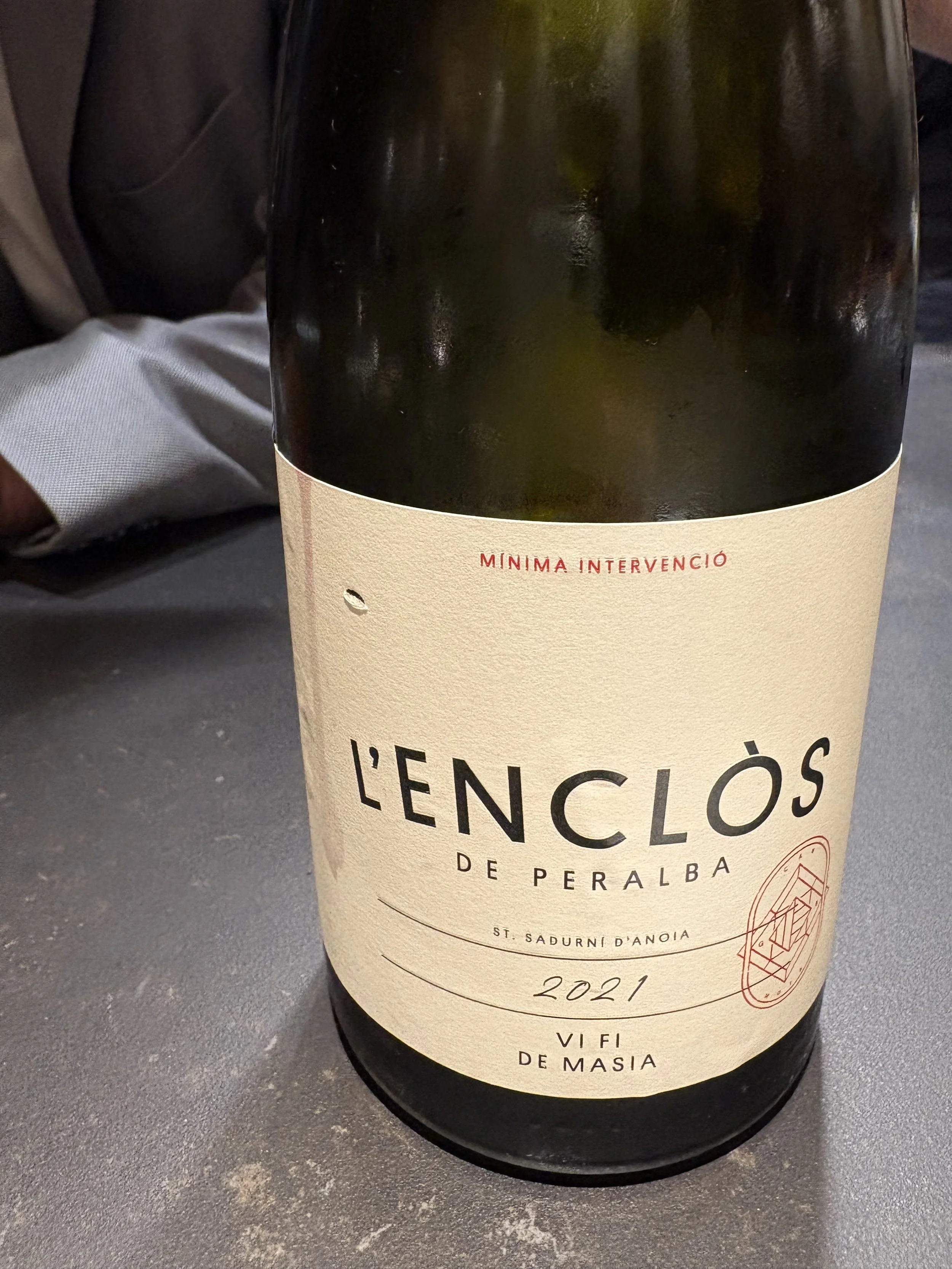
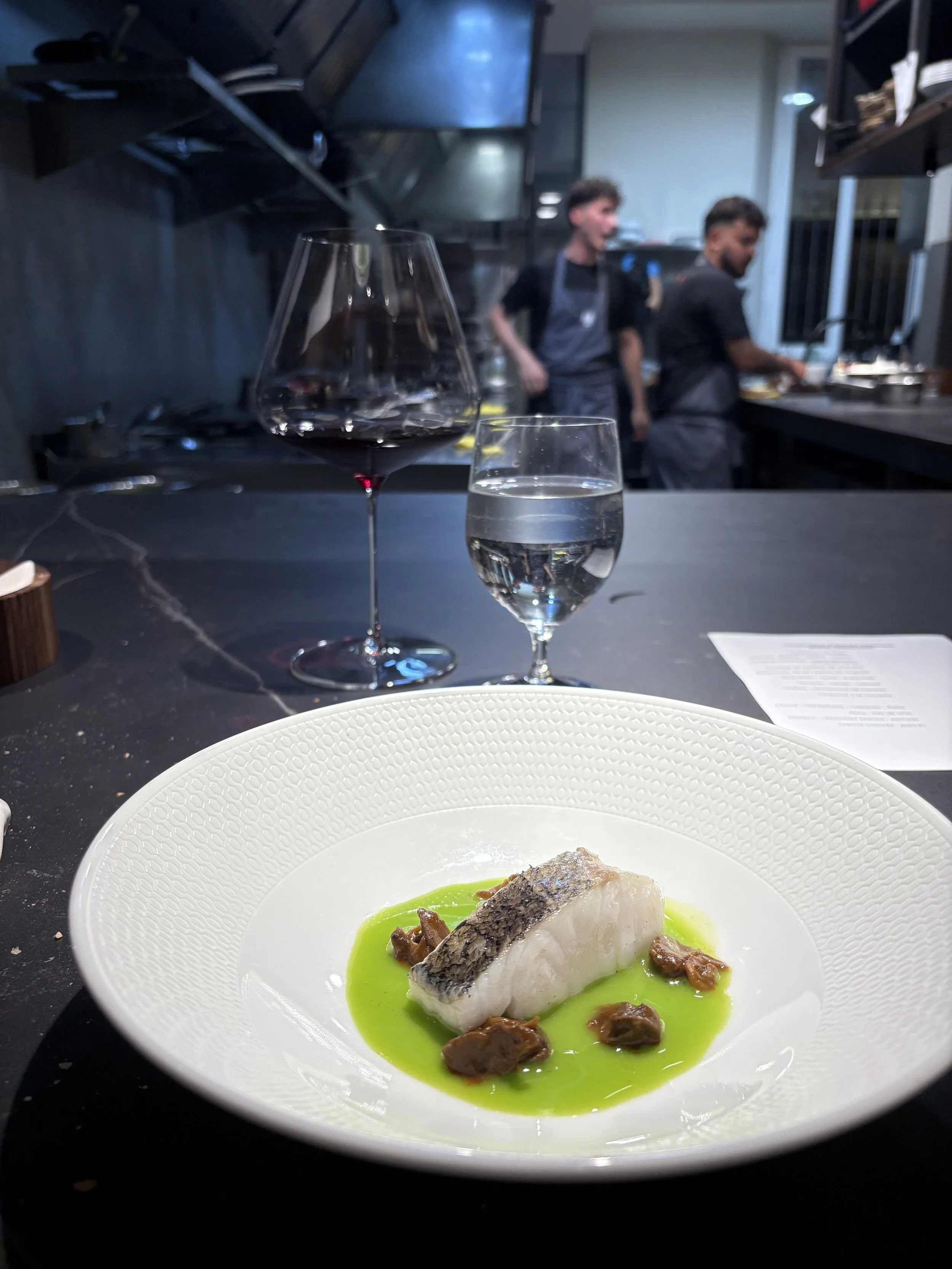
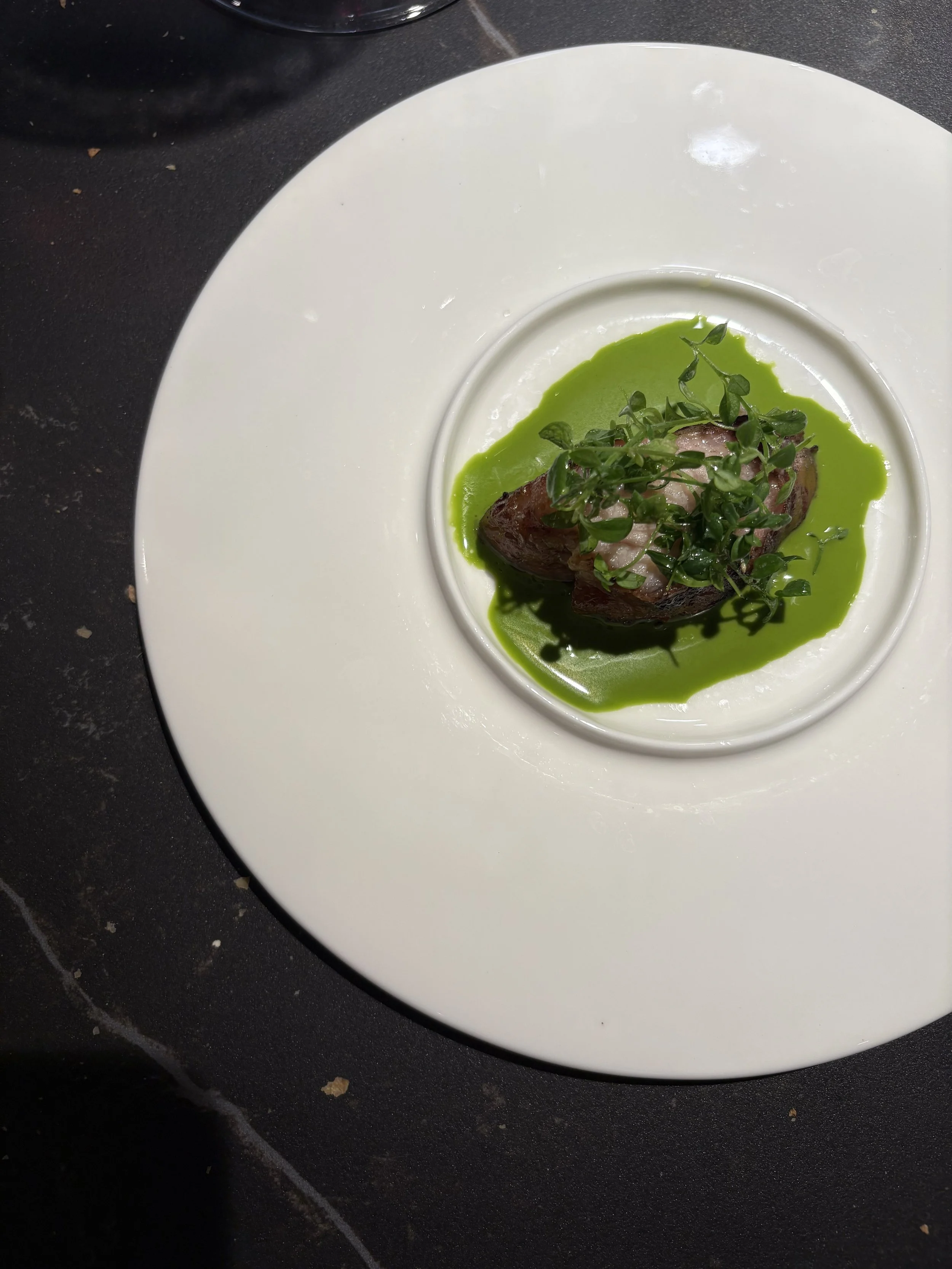
Next arrived a small piece of Merluza in parsley sauce with caracoles. Then Mollejas with a herb-marinated sauce, paired with Vi Fi de Masias from L’Enclos de Peralba.
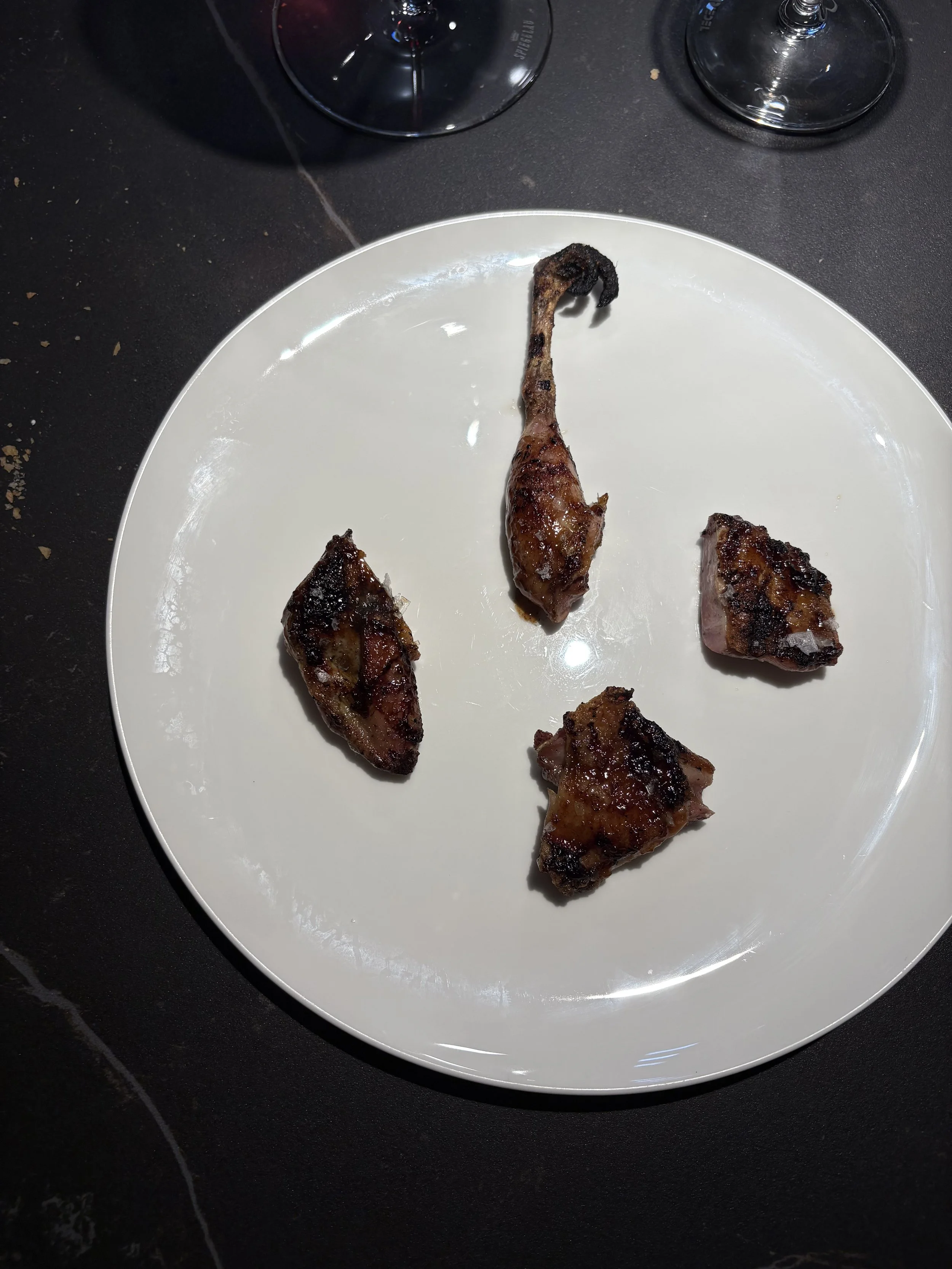
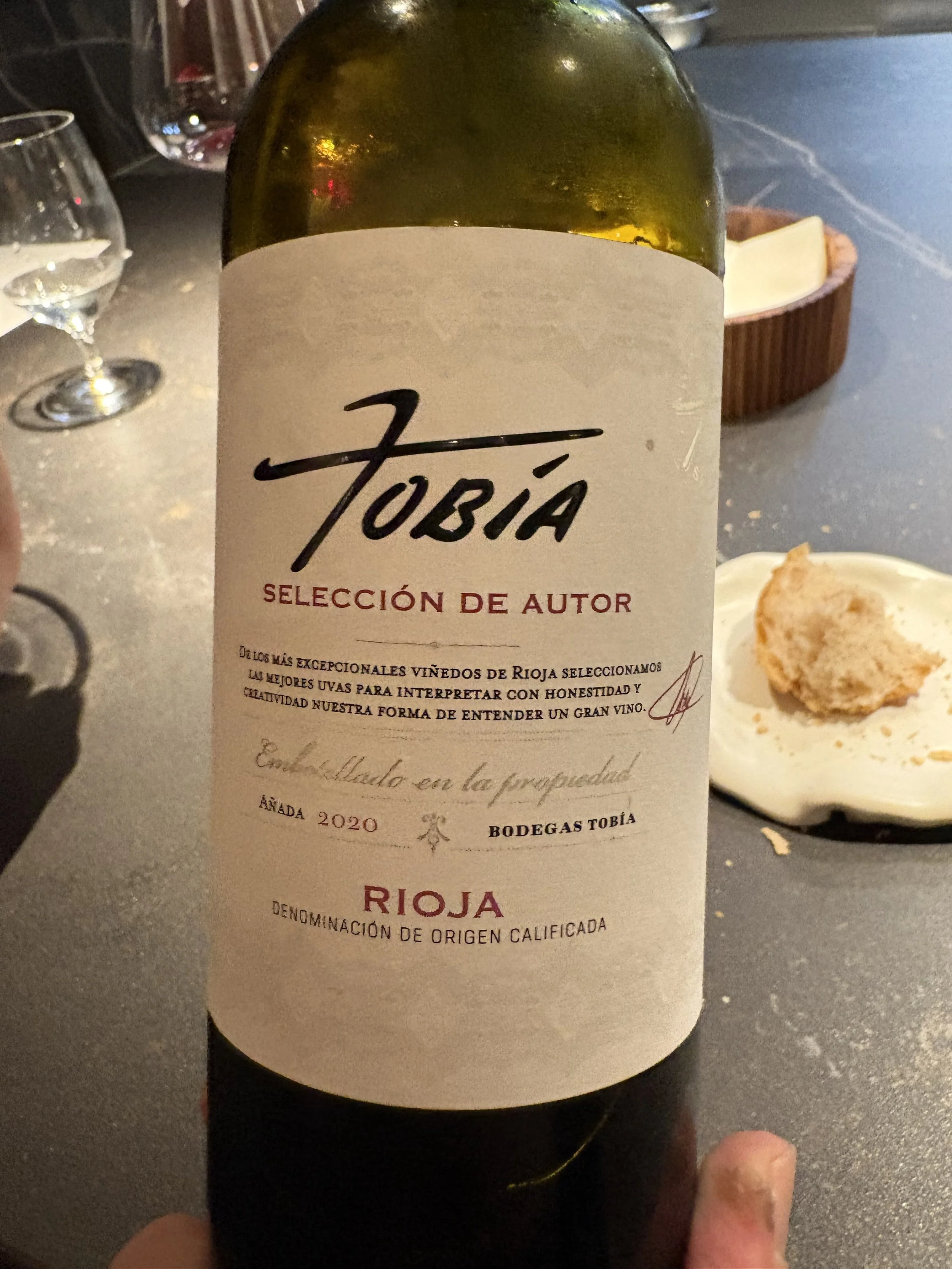
The award for creepiest dish definitely goes to the Codornia a la candela: a slightly terrifying charcoal-grilled quail, but incredibly tasty — especially with a glass of Tobía, Selección de Autor 2020.
And finally, the four desserts, all centered around fruit.
I had absolutely no room left.
But journalism has its duties.
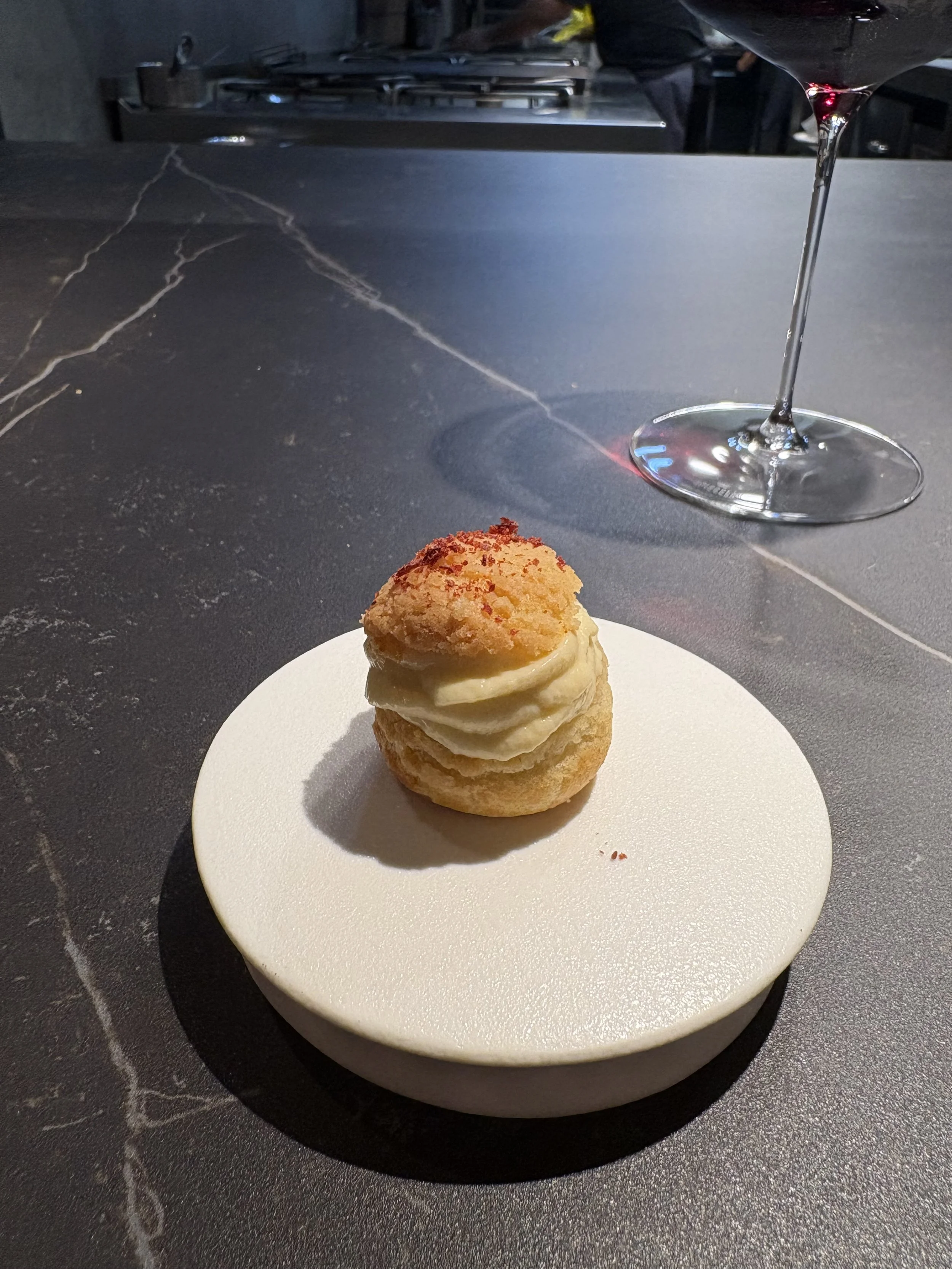
A bigné filled with lemon verbena cream, alongside pears and lías de vino, with notes of brioche, biscuits, and dried fruit.
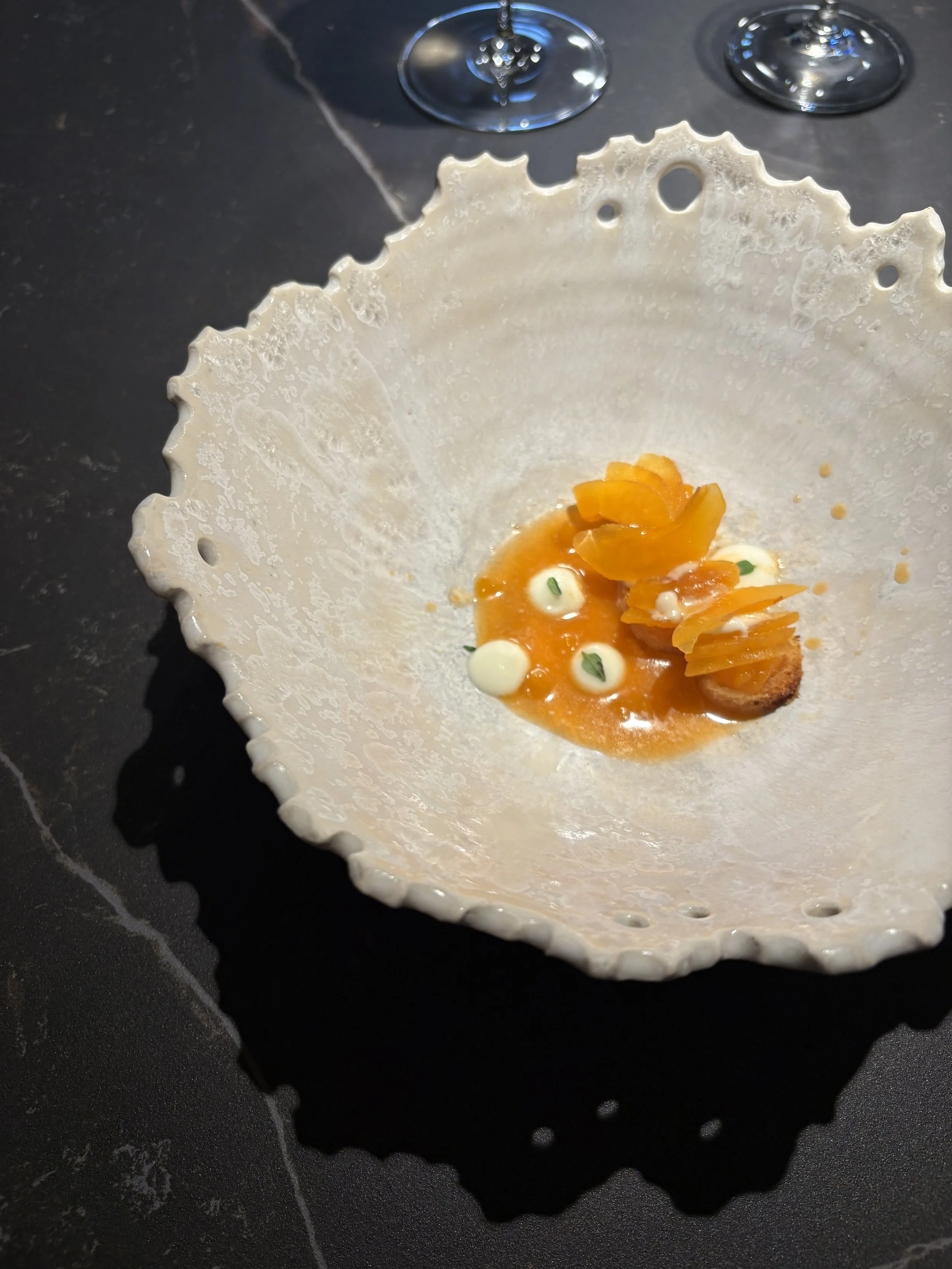
Loquats, white chocolate, and grapefruit — incredibly fresh and summery.
And lastly, suso (a traditional Málaga dessert), served with a delicate jasmine cream for dipping.
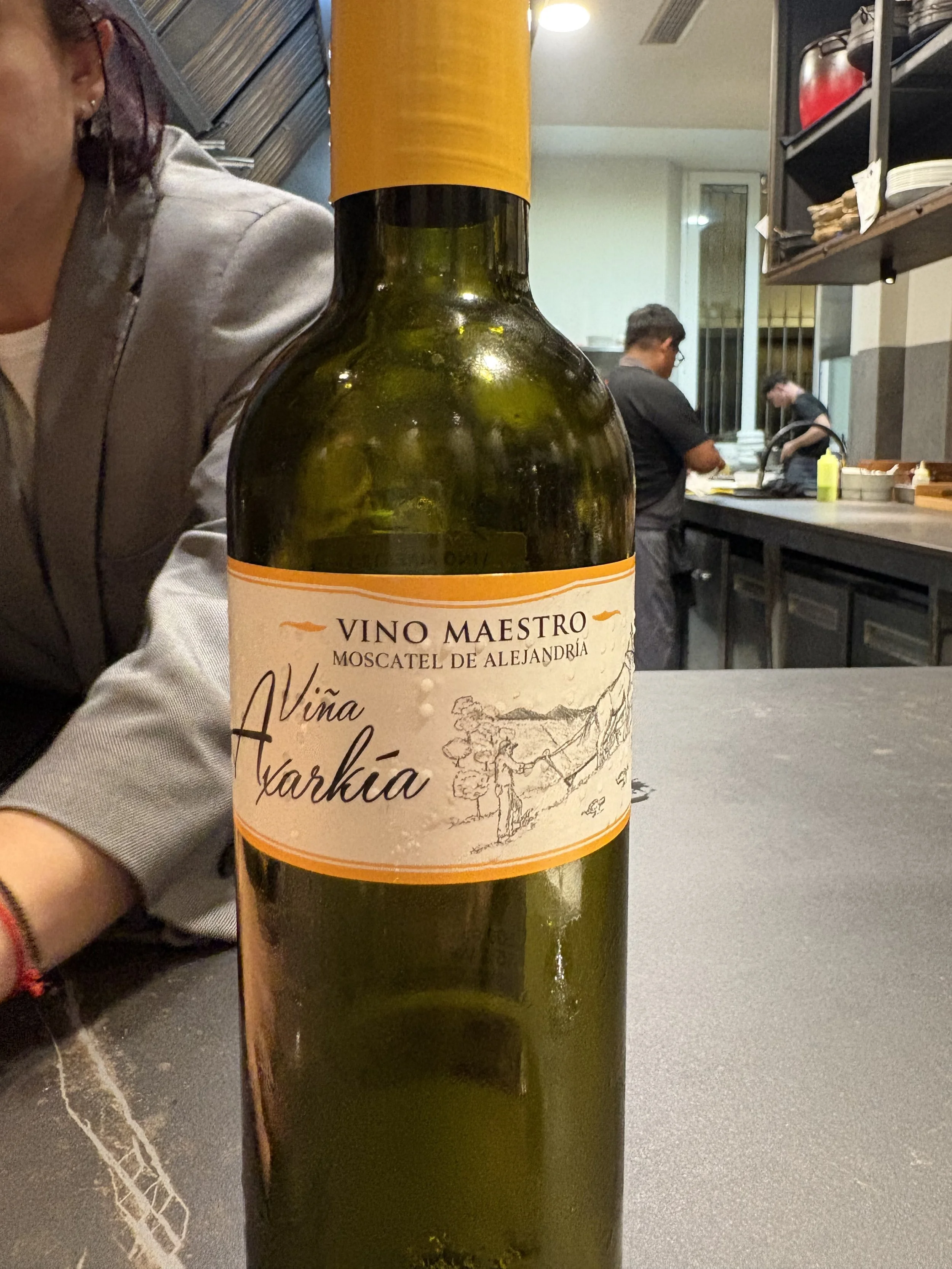
All washed down with a glass of Viña Axarkia from Bodegas Dimobe.
This is truly memory cooking: the authentic cuisine of inland Andalusía, built on few ingredients and zero frills, yet reinterpreted through a fresher and more modern lens.
For as much as fine dining may be losing part of its charm — between questionable sustainability and a level of refinement not always accessible or appreciated — it is comforting to find, in a Málaga overwhelmed by tourism, a restaurant that swims against the current, staying loyal to its own memory instead of chasing the palate of the average tourist.